CashTokens Studio · Issuance and registry
Issue the token, then keep the authority to update it.
CashTokens Studio is a browser client for CashTokens on Bitcoin Cash. It builds the genesis transaction, locks the token's identity output in an Authguard contract, publishes a BCMR registry to IPFS, and asks your wallet to sign. Fungible tokens, NFT collections, minting and distribution all run on the category you create.
- FT and NFT genesis
- Authguard identity vault
- BCMR registry on IPFS
- Mint and airdrop
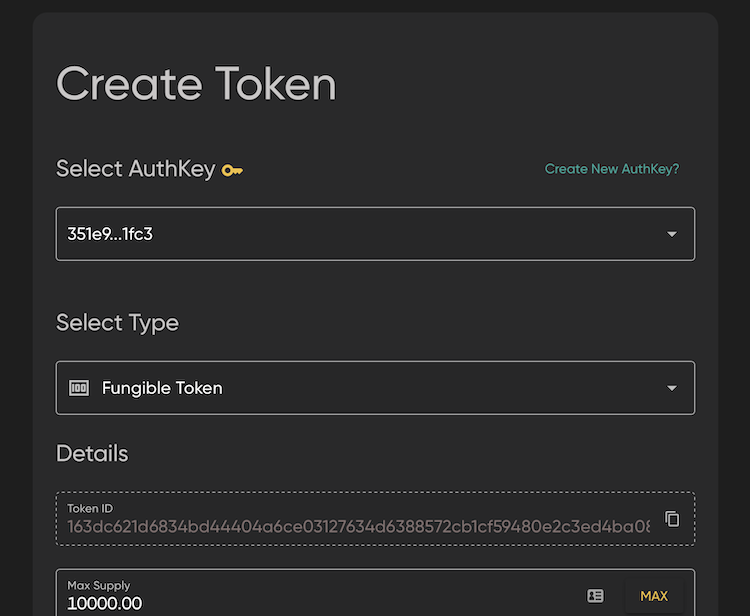
What it builds
From a genesis input to a published registry.
Token genesis
The category is fixed by a genesis input: an unspent BCH output that is output 0 of its transaction. The studio generates one, builds the genesis transaction, and issues the supply, decimals and NFT commitment you specify. The category cannot change afterwards, and every later transaction references it.
Authguard and auth key
The identity output, output 0 of the genesis transaction, goes to an Authguard P2SH20 contract instead of a plain address. The contract spends only with a second input carrying the auth key NFT, and, unless released, it returns the output to the same script. The key stays in your wallet; the identity output and the reserves behind it cannot move by accident. Releasing sends the output to an address you choose; burning it ends registry updates. One key can guard several identities.
BCMR registry
Symbol, decimals, icon and NFT types are a BCMR v2 JSON registry. The studio uploads it to IPFS and anchors the content hash and URIs in an OP_RETURN that starts with "BCMR". Each publication spends and recreates the identity output, so the authchain records every revision and wallets resolve the current one.
Minting and distribution
NFT collections mint from the identity output when it carries the minting capability: the next sequence, a chosen sequence, another minter, or a mutable NFT type. Fungible supply is created once and held in the vault, so distribution is a transfer or an airdrop from those reserves, to up to 50 addresses per transaction or to holders of the opt-in Airdrop Beacon NFT.
The specifics
What you are operating.
Interface
A Quasar and Vue 3 web app at cashtokens.studio. Transactions are composed in the browser and signed by the connected wallet.
Wallets
WizardConnect over its relay for HD wallets; WalletConnect v2 for single-address wallets.
Network
Bitcoin Cash mainnet by default; chipnet and testnet builds are supported through VITE_BCH_NETWORK.
Token standard
CashTokens: fungible amounts, NFTs and mixed outputs. Commitment and capability (none, mutable, minting) are set at creation or mint time.
Metadata
BCMR v2 (Bitcoin Cash Metadata Registry). The JSON is stored on IPFS and anchored by an OP_RETURN carrying the content hash and URIs.
Identity
Authguard, a CashScript P2SH20 contract. The auth key is an NFT with commitment 00 and capability none; it authorizes any spend of the identity output.
Chain access
Chaingraph for genesis, circulating supply, holders and authchain lookups; Electrum for UTXOs; Watchtower for broadcast with an Electrum fallback.
IPFS
Uploads go through the studio's API to Pinata; no pinning account is needed.
Explorer
Any category can be opened for its genesis, supply, holders and authchain.
Fees
Each transaction pays the BCH network fee. The studio holds no keys and no tokens; the vault is a contract on chain.
Questions
Asked and answered.
What happens if I lose the auth key?
The identity output cannot be spent without it, so the registry can no longer be updated and any fungible reserves or minting capability in the vault stay locked. The key is an NFT, so custody can move: transfer it and the new holder controls the vault.
Can the supply be increased after genesis?
The studio does not mint additional fungible supply: the amount is set at genesis and held in the vault, and distribution comes from those reserves. NFT collections can mint only when the identity output carries the minting capability.
How do wallets find the current metadata?
They follow the authchain: each registry publication spends the identity output and writes a BCMR OP_RETURN with the IPFS content hash and URIs. The latest valid publication is the current registry; versioning and identity snapshots decide whether older revisions are kept.
Does the studio hold my keys?
No. The browser composes transactions and sends them to the wallet for signature over WizardConnect or WalletConnect. The server never receives a key; its only write is the IPFS upload proxy.
Who can receive an airdrop?
Opted-in P2PKH token addresses, up to 50 per transaction; P2SH addresses are excluded. Recipients opt in by minting an Airdrop Beacon NFT.
The protocol is the product. The studio is the client.
A CashToken is a category, an identity output and a signature. CashTokens Studio builds the first two and hands the third to your wallet.